
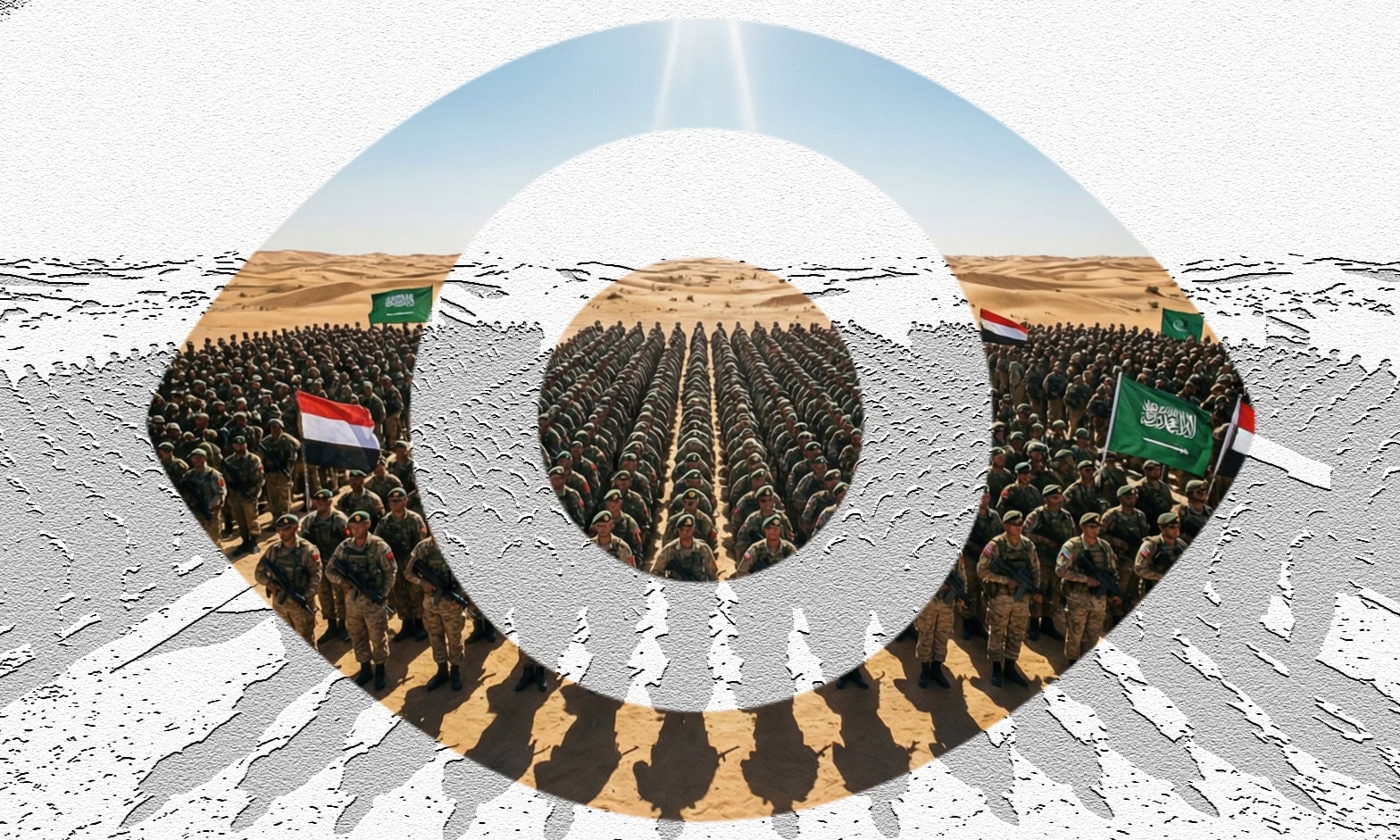
(Art direction and AI design: Jean-Dominique Lavoix-Carli)
Watch Out briefs flag emerging geopolitical and security developments that may carry significant second-order and longer-term implications. They are designed to support early awareness and strategic monitoring. For in-depth analysis, structured risk mapping, strategic foresight and early warning, please contact us.
What
Saudi Arabia’s strategy and actions in Yemen are entering a new phase and must be actively monitored within their broader regional and global strategic context.
Context
- Early 2026 US-Iran Stand-off and negotiations in the Gulf.
- The 2026 American Security Strategy is defined by a new approach to the Middle East: “Shift Burdens, Build Peace“, focused on empowering regional partners.
→ The Middle East is no longer the top US priority although remaining important with empowered “Middle East partners”. Thus space has been created for stronger regional leadership. - Yemen has been in civil war since 2014, with major domestic, regional and maritime security consequences.
- The Houthis, supported by Iran, have significantly contributed to Red Sea maritime insecurity.
- Tensions between the United Arab Emirates (UAE) and the Kingdom of Saudi Arabia (KSA), notably over Yemen at the end of 2025. KSA has pushed the UAE out of Yemen and is now the dominant Gulf external actor in the conflict.
Why it matters and impacts
- Since December 2025, transit lanes have cautiously been reopening.
→ Any shift in Yemen or Gulf dynamics could directly affect maritime security. - Gulf and broader Middle East power dynamics are being redrawn, with KSA playing an increasingly ambitious regional role.
→ How these emerging dynamics will evolve — and how sustainable they are — must be actively monitored. - China’s positioning in response to these changes is strategically critical in the context of growing US–China tensions.
- The future territorial and political configuration of Yemen is at stake, including:
- a possible end to the civil war;
- and/or the re-emergence of South Yemen.
Sources: Reuters; EurasiaReview; US National Security Strategy (Nov 2025) and 2026 National Defense Strategy.
→ For in-depth analysis, structured risk mapping and strategic foresight and early warning on Yemen and Gulf dynamics: contact us.