

On 24 September 2018, the U.S. Secretary of Commerce imposed new tariffs on 200 billion dollars worth of Chinese goods, thus widely escalating the “trade war” initiated by president Donald Trump against China in April 2018. Beijing immediately retaliated with tariffs on 60 billions worth of American goods (Will Martin, “China Hits Back at Trump …
Category Archives: Resources crisis
The U.A.E. and the Artificial Intelligence and Sustainability Revolution

The United Arab Emirates is shifting rapidly towards the artificial intelligence revolution. This shift is expressed by numerous decisions taken by the highest U.A.E. political authorities. For example, on 16 October 2017, the Sheikh Mohamed Bin Rashid Al Maktoum, vice-president of the U.A.E. and ruler of Dubai, appointed Omar Bin Sultan al Olama as minister …
Continue reading “The U.A.E. and the Artificial Intelligence and Sustainability Revolution”
The Chinese Artificial Intelligence Revolution

The artificial intelligence (AI) world summit took place in Singapore on 3 and 4 October 2017 (The AI summit Singapore). If we follow this global trend of heavy emphasis on AI, we can note the convergence between artificial intelligence and the emergence of “smart cities” in Asia, especially in China (Imran Khan, “Asia is leading …
Continue reading “The Chinese Artificial Intelligence Revolution”
The “One Belt One Road” Summit and the Chinese Shaping of Globalisation?

On 14 and 15 May 2017, the “One Belt, One Road” (OBOR) Forum for International Cooperation took place in Beijing. It hosted delegations from 63 countries and several international organisations. Heads of states and governments led in person 29 delegations from Asia, Africa, South America and Europe (“Belt and Road Forum for International Cooperation”, Xinhua.net). …
Continue reading “The “One Belt One Road” Summit and the Chinese Shaping of Globalisation?”
Saudi Arabia and the Chinese New Silk Road

During March 2017, King Salman of Saudi Arabia ended a six weeks tour in Asia with a state visit in China and a meeting with Chinese President Xi Jinping. This visit included the opportunity to start the negotiations about the integration of Saudi Arabia to the Chinese New Silk Road Grand strategy (Michael Tanchum, “Saudi Arabia …
Continue reading “Saudi Arabia and the Chinese New Silk Road”
The UAE and the Chinese New Silk Road
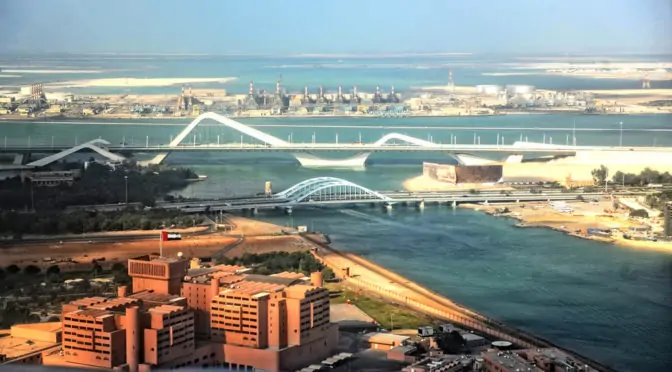
The United Arab Emirates (UAE) and China are negotiating, at the highest level, the integration of the UAE into the Chinese New Silk Road (NSR) initiative, also called the “One Belt, One Road” (OBOR) initiative (Sarah Townsend, “UAE and China “working to restore silk road trading route””, Arabian Business.com, 13 December 2015). This move corresponds …
Militarizing the Maritime New Silk Road (2) – In the Arabian Sea

This article looks at the way the current militarization of maritime segments of the Chinese New Silk Road is implemented in the Arabian Sea, and related consequences on geopolitics, including for businesses. It is the second part of a series, the first one focusing on militarization in the South China Sea (Jean-Michel Valantin, “Militarizing the …
Continue reading “Militarizing the Maritime New Silk Road (2) – In the Arabian Sea”
Militarizing the Chinese New Silk Road (part 1)

There are (more and more) missiles on the road. What we call here “the great roads” are created as answers to the necessity for Russia and China to connect Asian countries with resources from and markets of Russia and Europe. After having seen the ways the Russian are militarizing their Northern Sea Route (Jean-Michel Valantin, “Militarizing …
Continue reading “Militarizing the Chinese New Silk Road (part 1)”
The Chinese New Silk Road in East Africa

The Popular Republic of China (PRC) is building a naval base in Djibouti, which should be completed during 2017, alongside the already existing French and American military naval bases (“China’s base in Djibouti means more than an attribute of “global power”, Sputnik, 7/12/2016). This move is a crucial global development for China, for East Africa as …
Strategic Thinking in the Russian Arctic: When Threats Become Opportunities (2)
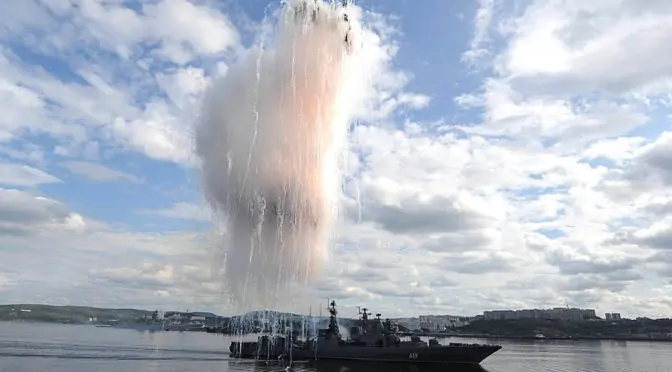
This article is the second part of our series focusing on the current development of the Russian Arctic region, while explaining and demonstrating the importance of using strategic thinking for governments as well as for business actors to understand current dynamical changes and to develop adequate strategies to face related geopolitical uncertainty. In the first part, we …
Continue reading “Strategic Thinking in the Russian Arctic: When Threats Become Opportunities (2)”