

This article identifies lessons we can learn from the impact of the conflict in Ukraine on businesses, as presented in the first part, to continue enhancing our understanding of the way businesses and the corporate world could usefully anticipate or foresee geopolitical and political risks and uncertainties.
From the way to identify which crises and geopolitical uncertainties can be – sometimes unexpectedly – of concern to a company (Lesson 1) to the best timing for starting the anticipation process (Lesson 2), the need to think outside the ideological box (Lesson 3) and multi-dimensionally (Lesson 4) and to understand “national interest” and its evolution (Lesson 5), the impacts of the war in Ukraine bring us a wealth of understanding and points out many necessary if not crucial improvements that may be endeavoured. These will thus be added to the points previously identified in “Lessons from and for the Brexit – Geopolitics, Uncertainties, and Business (2)”, after a general framework was defined in “Businesses and Geopolitics: Caught up in the Whirlwinds?” (1).
Impacts of the Conflict in Ukraine – Geopolitics, Uncertainties and Business (3)

With this article and the next one, we use the instability and conflict in Ukraine and the related impacts on businesses to continue enhancing our understanding of the way businesses and the corporate world could usefully anticipate or foresee geopolitical and political risks and uncertainties. RTAS Expertise Highlighted on Italian Television Channel LA7 The Houthis, Bab el-Mandeb, and Maritime Transport The Strange Mystery of Bolivia’s Lithium Reserves Beyond Geopolitics: Understanding the Critical Pressures Reshaping Our World. WATCH OUT – The Iran War, Saudi Arabia, and the Houthis SIGNAL – The Golden Dome, a New Technological Frontier WATCH OUT – Yemen and Saudi Arabia We review two major impacts of the war in Ukraine. First we look at the “surprising” cost of sanctions related to Ukraine …
Continue reading “Impacts of the Conflict in Ukraine – Geopolitics, Uncertainties and Business (3)”
The Warming Russian Arctic: Where Russian and Asian Business and Strategies Converge?

In this new article about the current development of the warming Russian Arctic, The Red (Team) Analysis Society studies how Russia is currently devising an industrial and business grand strategy. This strategy is created through new oil and gas exploitations and the constant opening of the Siberian Northern Sea Route. These new activities are made possible by the rapidly intensifying climate change, which is transforming the Arctic into a continental attractor for energy, business, shipping, land transport, from everywhere in Asia (Jean-Michel Valantin, “The Russian Arctic meets the Chinese New Silk Road”, The Red (Team) Analysis Society, 31 October, 2016). The Russian Arctic power of attraction can be identified from the fact that numerous Asian countries are attracted by the …
Scenarios for the Future of Libya – Sc 3.2 A Nationalist Libya

This article focuses on the second of the scenarios depicting a total victory for one Libyan faction, where the nationalist coalition – loyal to a non-Islamist and nationalist government – is victorious and guides Libya towards a secular and nationalist state where Sharia is not a source of governance. In our previous scenario we detailed the scenario of an Islamist victory where the new government gradually, with different paths according to speed, implements Sharia law and puts Libya on the path towards an Islamic state. Note: Considering the future names of potential factions that would result from a new split between the unity government, we shall use the label nationalist for those that supported the nationalist-dominated Council of Representatives (COR) …
Continue reading “Scenarios for the Future of Libya – Sc 3.2 A Nationalist Libya”
Lessons from and for the Brexit – Geopolitics, Uncertainties, and Business (2)

On 24 June 2016 morning, the U.K. announced the results of the referendum on the Brexit: 51.9% of the population voted to leave the EU against 48.1% wanting to remain, while the turnout reached 72,2% (BBC Referendum Results). This vote triggered among the media, financial and European political elite a “shock”, consternation, and a host of predictions of impending doom, while markets plunged worldwide (BBC News, “Brexit: What the world’s papers say“, 24 June 2016). It also set off a series of events and dynamics still unfolding nowadays with far-ranging consequences, globally, for the future. We shall use this real life case to further enhance our understanding of the way businesses and the corporate world relate to and especially anticipate or …
Continue reading “Lessons from and for the Brexit – Geopolitics, Uncertainties, and Business (2)”
The Russian Arctic meets the Chinese New Silk Road

In this article on the development of the energy, business and military nexus of the Arctic by Russia, the Red (Team) Analysis Society studies how the Russian Arctic is becoming a new crucial business and strategic “centre” in the world, through the creation of numerous energy and infrastructure projects and operations, which attract Chinese companies …
Continue reading “The Russian Arctic meets the Chinese New Silk Road”
Scenarios for the Future of Libya – Sc 3.1 An Islamist Libya
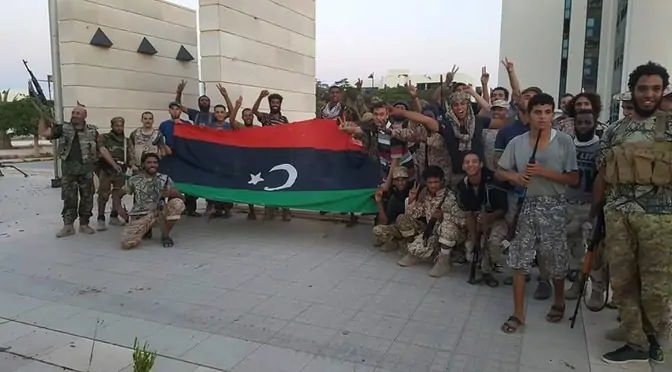
In our previous article we detailed three sub-scenarios of combined partition and spill over where Libya disappears as such through the creation of three new states, while consequent weaknesses is the cause of spill over to neighboring nations. We thus concluded the series of scenarios 2, which depicted a continuing civil war but with different terms, i.e. change of terrain or actors (see Mitchell, “Scenarios for the Future of Libya Within the Next Three to Five Years,” June 1, 2015; and Lavoix, “How to Analyze Future Security Threats (4): Scenarios and War,” December 30, 2013). This article focuses on the first of the two possible scenarios detailing a total victory in Libya, either by the Islamists or the nationalists. Scenario …
Continue reading “Scenarios for the Future of Libya – Sc 3.1 An Islamist Libya”
Businesses and Geopolitics (1): Caught up in the Whirlwinds?

What if, by May 2017, “non-liberal” movements and parties were in power in the U.S. with Donald Trump, France with Marine Le Pen and Austria with Norbert Hofer? The overall geopolitical configuration would most probably greatly change, in areas such as the tensions between “the West” and Russia, the upheavals between the U.S. and Eastern Asia, the European Union’s definition, policies and …
Continue reading “Businesses and Geopolitics (1): Caught up in the Whirlwinds?”
Behind-the-Scenes
Summer-Autumn 2016

The summer and early autumn have been particularly interesting times for the Red (Team) Analysis Society. We notably participated in crucial “behind-the-scenes” meetings and activities, which shape how the field of risk management, strategic foresight and warning, crisis prevention or more broadly strategic anticipation evolves, from practice, processes, and methodologies, to major issues, specific risks and uncertainties. About global risks, threats and uncertainties, …
Russian Arctic oil: a New Economic & Strategic Paradigm?

This article is the second of our series on the Anthropocene and security. Previously, we presented the larger dimensions and general elements framing the new (in)security. Here, we shall focus on latest developments regarding Russian Arctic oil. Between April and July 2016, the current Russian energy conquest of the Arctic led to the shipment of more than 230.000 barrels of oil from the Russian Arctic. They came from two recent on-shore fields, and from the Gazprom Prirazlomonoye off-shore oil rig (Irina Slav, “Russia Ramps Up Arctic Oil Production”, OilPrice.Com, July 21, 2016). The latter is the first of the glacial Barents Sea. The 2016 flow from the Russian Arctic almost doubled compared with 2015. In the meantime, the Russian ministry of …
Continue reading “Russian Arctic oil: a New Economic & Strategic Paradigm?”